
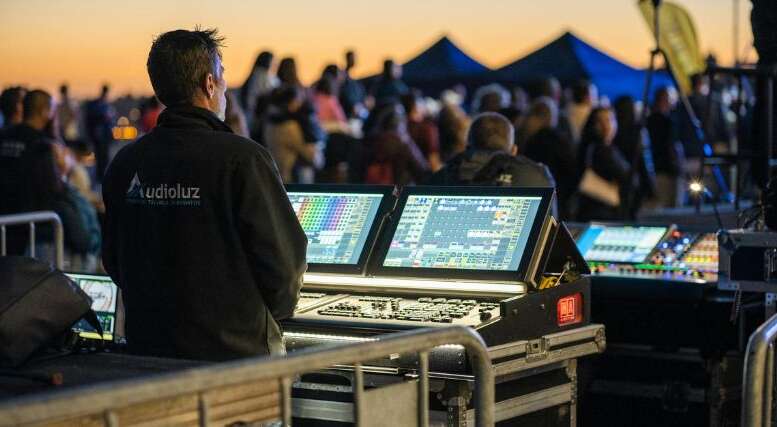
Most people only notice event technology when something goes wrong. Nobody thinks about internet infrastructure while walking into a conference hall. Nobody pays attention to communication systems when security teams are doing their jobs properly. And almost nobody notices how many moving parts sit behind a large event unless there is a delay somewhere. But large-scale events have become heavily dependent on technology over the last few years, probably more than many organisers expected.
A business expo with a few thousand visitors now runs on a mix of digital systems, all operating together at once. Ticket scanning, mobile check-ins, vendor coordination, payment systems, access control, live schedules, streaming equipment, staff communication, and crowd monitoring all need to stay functional for hours without interruption. That sounds manageable on paper. In reality, it gets chaotic very quickly.
One overloaded Wi-Fi zone can slow down digital payments across an entire section. A delayed registration desk creates crowd build up near entrances. Staff members miss updates because signals inside packed venues become unreliable. These are small problems individually, but events rarely deal with issues one at a time. That is why more organisers are focusing on operational technology much earlier in the planning process, instead of treating it as something to sort out a week before launch day.
Event Platforms Are Now Running Entire Operations
Event software used to be pretty simple. Mostly registrations and digital tickets. Now platforms are expected to handle scheduling, attendee messaging, QR access, exhibitor coordination, networking features, analytics, and live announcements, all from one dashboard. Some systems even monitor crowd density in real time so teams can respond before certain areas become difficult to manage. That kind of visibility matters more at large venues than people realise.
At conferences or exhibitions, different teams are usually handling completely different responsibilities at the same time. Production crews are dealing with stage schedules while registration teams are managing entry flow. Vendors need support. Security teams are monitoring movement. Technical staff are fixing problems that attendees never even notice.
Without centralised systems, communication gaps appear quickly. Eventbrite recently discussed how hybrid experiences and digitally connected events continue shaping attendee expectations because visitors now expect faster updates and smoother digital interaction throughout events. And honestly, attendees have become less patient with delays than they used to be.
Poor Connectivity Still Creates Major Problems
Internet access sounds like a basic requirement until several thousand people try using the same network simultaneously. Guests are uploading content, opening event apps, downloading tickets, making payments, sending messages, and joining live sessions at the same time vendors and staff are relying on the exact same infrastructure behind the scenes.
Once networks become overloaded, things start slowing down in ways that affect the entire venue. Payments take longer. Apps stop refreshing properly. Staff updates arrive late. Support teams end up troubleshooting connection issues instead of focusing on operations. Because of this, many venues are moving toward segmented network setups where staff operations, payment systems, and guest access are separated instead of running through one shared connection.
Cisco has also pointed toward the growing importance of newer wireless infrastructure in crowded environments such as stadiums and convention centres. Reliable internet is not really a “bonus feature” anymore. People expect it to work automatically.
Communication Usually Becomes the Biggest Test

One thing event organisers learn very quickly is that communication gets harder as crowds get bigger. Mobile networks become inconsistent in crowded venues. Calls fail randomly. Messages arrive late. During normal situations, it is annoying. During operational issues, it becomes a real problem. This is one reason many large event teams still keep separate communication systems in place, even when most operations are digital.
In practice, organisers often continue using two way radio solutions between floor managers, security staff, production teams, and support crews because direct communication is usually faster during live situations than relying entirely on overloaded mobile networks. It is not the newest technology in the room, but reliability matters more than innovation during crowded events. And that part gets overlooked surprisingly often.
Faster Payments Keep Crowds Moving
Long queues still ruin event experiences faster than expensive production mistakes. People lose patience quickly when waiting for food, merchandise, or entry access, especially during packed exhibitions or concerts where movement is already limited.
Cashless systems have helped reduce some of that friction. Transactions move faster, vendors handle less manual processing, and organisers get clearer visibility into activity levels throughout the venue.
At larger events, even small delays spread outward. One slow section eventually affects crowd movement nearby, which creates pressure in other areas too. Most operational problems at events are connected somehow. That is the part many people outside the industry never really see.
Data Is Quietly Influencing Future Decisions
Event planning has also become much more data-driven than before. Organisers are paying attention to movement heat maps, attendance spikes, engagement patterns, queue times, and traffic flow after events end. Sometimes the most useful information comes from small operational details that seemed unimportant at the time.
One hallway becomes consistently overcrowded every afternoon. Certain booths attract traffic while nearby sections stay empty. A networking area gets ignored because it sits too far from the main flow of attendees.
Those patterns help organisers make better decisions for future events without relying entirely on post-event surveys, which are not always reliable anyway.
Conclusion
Nowadays, practically every aspect of a big event is supported by technology, even if guests hardly see it when everything is going well.
The majority of visitors just recall how well-organised or annoying the event was. Whether payments worked quickly. Whether information was easy to access. Whether the staff seemed coordinated when problems appeared. Usually, the strongest event operations are the ones people never think about at all because everything works quietly in the background the entire time.
Be the first to comment on "Essential Technologies Every Large-Scale Event Team Should Consider"