
There’s a quiet moment most people over 40 recognize: your phone drifts farther from your face, menus get harder to decode, and suddenly, reading glasses appear in every room like backup plans. Age-related near vision loss—clinically known as presbyopia—isn’t dramatic, but it’s persistent. And until recently, the solutions felt equally predictable.
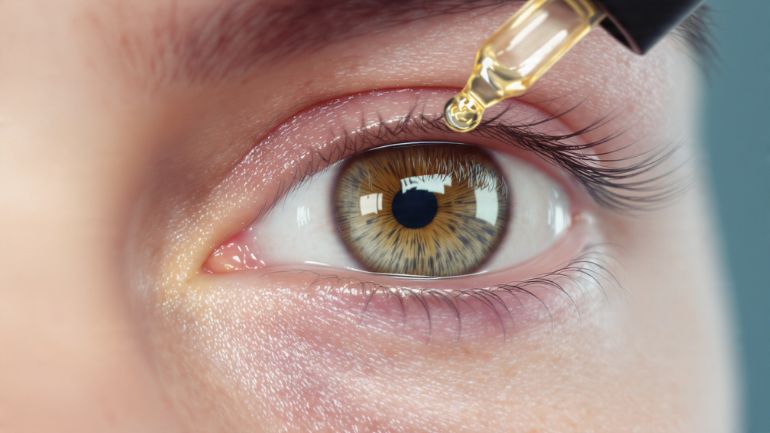
Now, eye drops are stepping into that space, offering a low-friction alternative that doesn’t involve swapping glasses all day.
What’s Actually Happening to Your Vision
Presbyopia isn’t a disease—it’s a natural shift. The eye’s lens gradually loses flexibility, making it harder to focus on close objects. According to the National Eye Institute, this process typically begins in your early to mid-40s and progresses over time.
Glasses help compensate, but they don’t address the underlying mechanism. That’s where prescription eye drops from VIZZ come in.
How Eye Drops Help Improve Near Vision
Modern eye drops for presbyopia work by adjusting how light enters the eye—often by slightly constricting the pupil. This creates a “pinhole effect,” increasing depth of focus so nearby objects appear clearer.
It’s not magic. It’s optics.
Unlike glasses, which sit outside your body, drops work directly with your eye’s natural structure. For many users, the effect kicks in within minutes and can last several hours, depending on the formulation.
1. Convenience Without the Constant Switching
The biggest appeal is simple: fewer interruptions.
If you’ve ever bounced between reading glasses and normal vision throughout the day—checking your phone, reading labels, glancing at a laptop—you know the friction adds up. Eye drops reduce that constant switching.
Instead of managing accessories, you manage a routine.
For professionals, travelers, or anyone juggling tasks, this small shift can feel surprisingly significant.
2. A More Natural Visual Experience
Glasses correct vision, but they also create boundaries—frames, focal zones, distortions at the edges.
Eye drops, on the other hand, maintain your natural field of view. There’s no physical barrier, no need to adjust positioning. You simply see more clearly at close range while preserving distance vision.
This is especially useful in dynamic environments—think cooking, shopping, or multitasking at work—where you’re constantly shifting focus.
3. Discreet and Low Maintenance
There’s also a subtle lifestyle angle.
Not everyone loves the look or inconvenience of reading glasses. Eye drops offer a more discreet alternative. No cases, no forgetting them at home, no stacking pairs in different rooms.
For many, it’s less about aesthetics and more about simplicity.
4. Flexible Use Based on Your Day
One overlooked benefit: control.
You don’t have to commit to wearing something all day. Eye drops can be used when needed—before a meeting, while working on a screen, or during an evening out.
This flexibility makes them appealing for people who don’t yet need full-time correction but still feel the daily friction of near vision loss.
5. A Non-Invasive Step Before Bigger Decisions
Surgical options like LASIK or lens implants exist, but they’re not for everyone. Eye drops offer a non-invasive middle ground.
They allow users to manage symptoms without long-term commitment or recovery time. For many, that’s enough.
If you’re exploring options, platforms like VIZZ provide insight into emerging treatments and how they fit into modern vision care.
Are Eye Drops Right for Everyone?
Not exactly.
Like any treatment, results vary. Some people may experience mild side effects like headaches or dim vision in low light. Others may find the duration shorter than expected.
That said, for a large group of presbyopia patients—especially those in the early to moderate stages—eye drops represent a practical, low-effort upgrade.
Final Thought: Small Changes, Noticeable Impact
Presbyopia doesn’t arrive all at once. It creeps in through small inconveniences—holding menus farther away, increasing screen brightness, squinting just a bit more than usual.
The appeal of eye drops isn’t that they reinvent vision care. It’s that they remove friction from everyday moments.
And sometimes, that’s exactly what people are looking for—not a dramatic fix, but a smoother way to see what’s already in front of them.
Be the first to comment on "Benefits Of Using Eye Drops For Age-Related Near Vision Loss"