
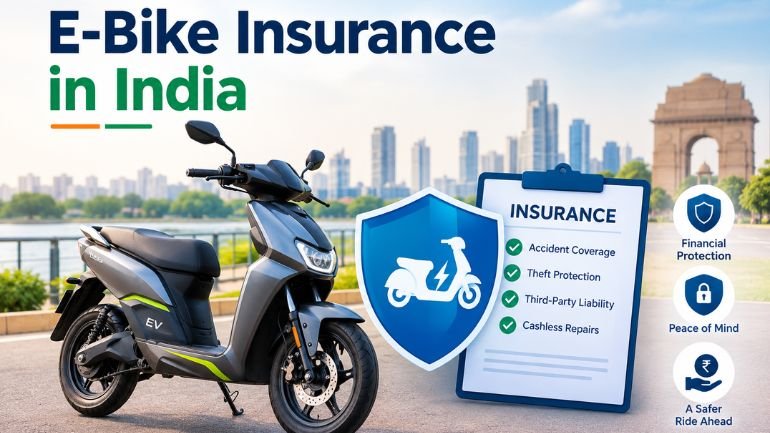
The popularity of e-bikes in India is on the rise as a cost-effective and environmentally friendly mode of transportation. However, understanding e-bike insurance is important, especially for higher-powered electric two-wheelers. Before you hit the road, let’s learn the key insurance requirements.
Legal Classification of E-Bikes
In India, motor vehicles are classified into two categories of e-bikes under the Indian Motor Vehicle Rules. The central law exempted the low-speed e-bikes with up to 250W of motor power and a speed limit of 25 km/h from registration and insurance. Any e-bike or cycle that exceeds these limits of power or speed is classified as a motor vehicle and required to be registered, should have insurance for bike, as well as have a valid driving licence.
Most of the bikes you will find for sale today, and even popular conversion kits, are in this higher power classification.
Types of Coverage Available
- Third-party coverage makes up for any damage done to others, vehicles, or property and is mandatory with higher-powered e-bikes.
- Full coverage insurance provides protection for your personal bike. In addition, it also offers protection to your vehicle, designed to cover theft, fire, floods, and anything else that may inadvertently occur.
- Extra features like battery protection and roadside service can help mitigate the unique dangers riders face with an e-bike, as replacements can be costly.
Documents Required for E-Bike Insurance
If your e-bike is manufactured, you will likely need details from your previous policy, along with an invoice for the purchase, and a registration certificate with your driving licence. Insurers generally need more information with regard to the exact power rating of a converted or custom-built e-bike. This will typically require additional documents, such as motor specifications, battery certification, and an RTO inspection certificate.
Registration Process for Higher-Power E-Bikes
For e-bikes classified as motor vehicles, here is the registration process:
- Present identification and address along with the documents of purchase.
- Purchase third-party insurance before the RTO inspection, at least temporarily.
- Have the vehicle checked by an RTO officer to ensure motor power and specifications.
- Get a temporary registration mark upon successful completion of the inspection.
- Obtain the status of permanent RC after the end of the temporary registration period.
What to Look for While Choosing Coverage
- Time-efficient claims process: An insurer with a streamlined claims procedure for faster assistance when required.
- Broad network support: Check for large network garages that offer easier cashless claim setup and vehicle repairs.
- EV-specific add-ons: Consider EV-specific add-ons such as battery protection and charger protection.
- Different insurance for bike coverage: Ensure that both the manufacturer-built and converted e-bikes are covered.
- Practical EV protection: Choose coverage that addresses the specific components and risks associated with electric two-wheelers.
Conclusion
Having the right e-bike insurance is not just about abiding by the rules. It keeps your e-bike from being stolen, getting into an accident, or incurring unexpected repair fees. If you are thinking about purchasing or converting an e-bike, you should know what it is rated for and what paperwork is necessary. Choose coverage that suits your bike and riding needs.
Be the first to comment on "E-Bike Insurance in India Rules, Documents and Coverage Explained"