
Introduction
In today’s competitive digital marketplace, businesses can no longer afford disconnected systems and manual data entry. As online sales channels continue to expand, companies need a unified technology ecosystem that seamlessly connects their ecommerce platform, inventory management, accounting software, customer data, and business operations.
This is where ERP Integration becomes a game-changer.
By connecting your ecommerce platform with an Enterprise Resource Planning (ERP) system, businesses can automate workflows, improve operational efficiency, reduce errors, and gain real-time visibility into their operations.
In this complete guide, we’ll explore everything you need to know about ecommerce ERP integration, including benefits, implementation processes, challenges, best practices, and future trends.
What is Ecommerce ERP Integration?
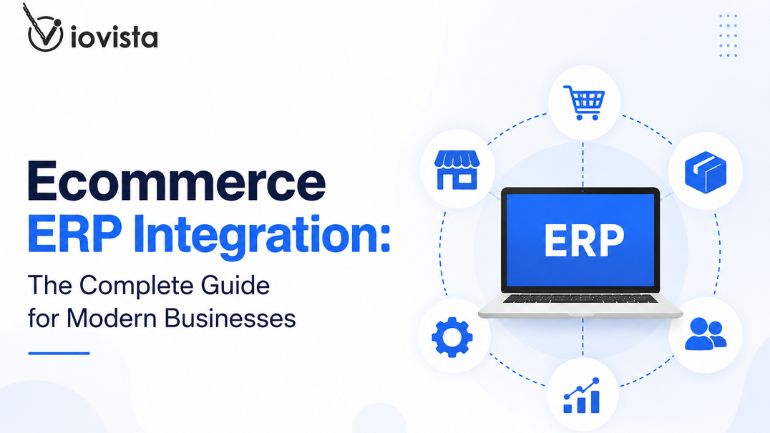
Ecommerce ERP Integration refers to the process of connecting an ecommerce platform with an Enterprise Resource Planning (ERP) system to enable automatic data exchange between the two systems.
An ERP system serves as the central hub for managing core business functions such as:
- Inventory Management
- Order Processing
- Accounting and Finance
- Procurement
- Warehouse Management
- Supply Chain Operations
- Customer Relationship Management (CRM)
- Human Resources
When integrated with an ecommerce platform, data flows automatically between systems without manual intervention.
For example:
- Online orders sync directly to the ERP
- Inventory updates in real-time
- Shipping information is automatically shared
- Customer records remain consistent across systems
- Financial transactions sync with accounting modules
This seamless Software Integration eliminates data silos and creates a unified business environment.
Why Ecommerce Businesses Need ERP Integration
As ecommerce businesses grow, managing operations manually becomes increasingly difficult.
Common challenges include:
- Inventory discrepancies
- Order fulfillment delays
- Data entry errors
- Inaccurate reporting
- Poor customer experiences
- Operational inefficiencies
ERP integration solves these challenges by creating a centralized source of truth.
Key Reasons Businesses Invest in ERP Integration
Real-Time Inventory Visibility
Inventory levels update automatically across all sales channels, reducing overselling and stockouts.
Faster Order Processing
Orders flow directly into the ERP system for fulfillment, invoicing, and shipping.
Improved Customer Experience
Customers receive accurate product availability, order updates, and delivery information.
Better Business Intelligence
Decision-makers gain access to consolidated reporting and analytics.
Reduced Operational Costs
Automation minimizes manual work and administrative overhead.
How Ecommerce ERP Integration Works
The integration process enables bidirectional data exchange between systems.
Data Flow Typically Includes:
| Ecommerce Platform | ERP System |
| Product Information | Inventory Records |
| Customer Data | Customer Accounts |
| Orders | Sales Orders |
| Payments | Financial Records |
| Shipping Updates | Fulfillment Data |
| Returns | Reverse Logistics |
The integration can occur through:
- APIs
- Middleware Platforms
- Custom Connectors
- iPaaS Solutions
- Native Integrations
Key Components of ERP Integration
Successful ERP integration typically includes several critical modules.
Product Synchronization
Ensures:
- Product names
- Descriptions
- Pricing
- Categories
- SKUs
- Images
remain consistent across systems.
Inventory Synchronization
Maintains accurate stock levels in real time.
Benefits include:
- Preventing overselling
- Avoiding stockouts
- Improving forecasting
Order Management Integration
Automatically transfers:
- New orders
- Order updates
- Shipping information
- Order statuses
between systems.
Customer Data Synchronization
Creates a unified customer profile by syncing:
- Contact information
- Purchase history
- Account details
- Loyalty data
Financial Integration
Connects ecommerce transactions with accounting processes such as:
- Invoicing
- Revenue tracking
- Tax calculations
- Financial reporting
Benefits of Ecommerce ERP Integration
1. Centralized Business Operations
ERP integration creates a single source of truth for business data.
Benefits:
- Improved visibility
- Better decision-making
- Increased efficiency
2. Increased Automation
Automation reduces repetitive manual tasks.
Examples:
- Order entry
- Inventory updates
- Invoice creation
- Shipment tracking
3. Enhanced Inventory Management
Businesses gain real-time control over inventory levels.
Advantages include:
- Better stock planning
- Reduced carrying costs
- Improved demand forecasting
4. Improved Customer Satisfaction
Customers benefit from:
- Accurate inventory availability
- Faster deliveries
- Better communication
- Reduced order errors
5. Better Financial Accuracy
ERP integration improves:
- Revenue recognition
- Tax compliance
- Financial reporting
- Cash flow visibility
6. Scalability for Growth
As order volumes increase, integrated systems can scale without requiring proportional increases in staffing.
Common ERP Systems Used in Ecommerce
Popular ERP solutions include:
- SAP Business One
- Oracle NetSuite
- Microsoft Dynamics 365
- Acumatica
- Odoo
- Sage ERP
- Epicor
- Infor ERP
Each platform offers different capabilities depending on business size and industry requirements.
Ecommerce Platforms Commonly Integrated with ERP Systems
Popular ecommerce platforms include:
- Shopify
- Adobe Commerce (Magento)
- BigCommerce
- WooCommerce
- Salesforce Commerce Cloud
- Wix Ecommerce
- OpenCart
Modern ecommerce businesses often integrate multiple sales channels into a single ERP environment.
ERP Integration Methods
API-Based Integration
Uses application programming interfaces to exchange data in real time.
Advantages:
- Fast synchronization
- Flexible architecture
- High scalability
Middleware Integration
Middleware acts as a bridge between systems.
Benefits include:
- Reduced complexity
- Easier maintenance
- Multi-system connectivity
Custom Integration
Built specifically for unique business requirements.
Suitable for:
- Complex workflows
- Enterprise-level operations
- Specialized business models
iPaaS (Integration Platform as a Service)
Cloud-based integration platforms simplify software connectivity.
Examples:
- MuleSoft
- Celigo
- Boomi
- Jitterbit
Challenges of Ecommerce ERP Integration
Despite the benefits, businesses often face implementation challenges.
Data Migration Issues
Poor-quality data can create synchronization problems.
Best Practice
Clean and standardize data before integration.
System Compatibility
Legacy systems may lack modern integration capabilities.
Best Practice
Conduct a comprehensive technology assessment.
Integration Complexity
Multiple business processes must be mapped accurately.
Best Practice
Document workflows before implementation.
User Adoption
Employees may resist process changes.
Best Practice
Provide training and change management support.
Security Concerns
Data exchanges create additional security considerations.
Best Practice
Implement:
- Encryption
- Access controls
- Compliance standards
- Regular security audits
ERP Integration Implementation Process
Step 1: Assess Business Requirements
Identify:
- Business goals
- Operational challenges
- Integration objectives
Step 2: Evaluate Existing Systems
Analyze:
- Ecommerce platform
- ERP capabilities
- Third-party applications
Step 3: Define Data Flows
Determine:
- What data needs synchronization
- Data frequency
- Business rules
Step 4: Select Integration Method
Choose between:
- APIs
- Middleware
- Custom development
- iPaaS solutions
Step 5: Develop and Test
Testing should cover:
- Functional testing
- Performance testing
- Security testing
- User acceptance testing
Step 6: Deploy and Monitor
Post-launch monitoring helps identify:
- Synchronization issues
- Performance bottlenecks
- Data inconsistencies
Best Practices for Successful ERP Integration
Define Clear Objectives
Establish measurable KPIs.
Focus on Data Quality
Clean data improves integration success.
Prioritize Security
Protect customer and business information.
Use Scalable Architecture
Support future business growth.
Conduct Thorough Testing
Validate all workflows before launch.
Train Employees
Ensure successful adoption.
Future Trends in Ecommerce ERP Integration
Artificial Intelligence
AI-powered automation will improve:
- Demand forecasting
- Inventory planning
- Customer service
Real-Time Analytics
Businesses will gain faster access to actionable insights.
Cloud-Based ERP Systems
Cloud adoption continues to accelerate integration flexibility.
Omnichannel Commerce Integration
ERP systems will increasingly connect:
- Marketplaces
- Retail stores
- Mobile apps
- Social commerce channels
Advanced Automation
Organizations will automate more end-to-end workflows with minimal human intervention.
How ERP Integration Supports Ecommerce Development
Modern E-commerce Development goes beyond building an online store.
Businesses need:
- Connected systems
- Automated workflows
- Real-time data synchronization
- Scalable technology infrastructure
ERP integration strengthens ecommerce development by creating a seamless connection between customer-facing storefronts and backend business operations.
As ecommerce ecosystems become more complex, robust Software Integration capabilities are essential for delivering operational efficiency and exceptional customer experiences.
Frequently Asked Questions (FAQs)
What is ERP integration in ecommerce?
ERP integration connects an ecommerce platform with an ERP system, enabling automatic data exchange between business operations and online sales channels.
Why is ERP integration important?
It improves efficiency, automates processes, reduces errors, and provides real-time business visibility.
Which ecommerce platforms support ERP integration?
Most major platforms, including Shopify, Magento, BigCommerce, WooCommerce, and Salesforce Commerce Cloud, support ERP integration.
How long does ERP integration take?
Project timelines vary based on complexity but typically range from several weeks to several months.
What are the biggest ERP integration challenges?
Data migration, system compatibility, security concerns, workflow mapping, and user adoption are among the most common challenges.
Is ERP integration suitable for small businesses?
Yes. Small and mid-sized businesses can significantly benefit from automation, operational efficiency, and scalability provided by ERP integration.
Conclusion
Ecommerce ERP integration has become a critical investment for businesses seeking operational efficiency, scalability, and sustainable growth. By connecting ecommerce platforms with ERP systems, organizations can automate processes, improve inventory accuracy, enhance customer experiences, and gain real-time visibility into their operations.
Whether you’re modernizing existing systems or planning a new ecommerce initiative, a well-executed ERP Integration strategy can serve as the foundation for long-term success.
For businesses looking to streamline operations through advanced Software Integration and custom E-commerce Development solutions, partnering with an experienced technology provider can make all the difference. Companies like Iovista help organizations build scalable ecommerce ecosystems by integrating ERP platforms, ecommerce technologies, and business-critical applications to create a seamless digital commerce experience.
Be the first to comment on "Ecommerce ERP Integration: The Complete Guide for Modern Businesses"