
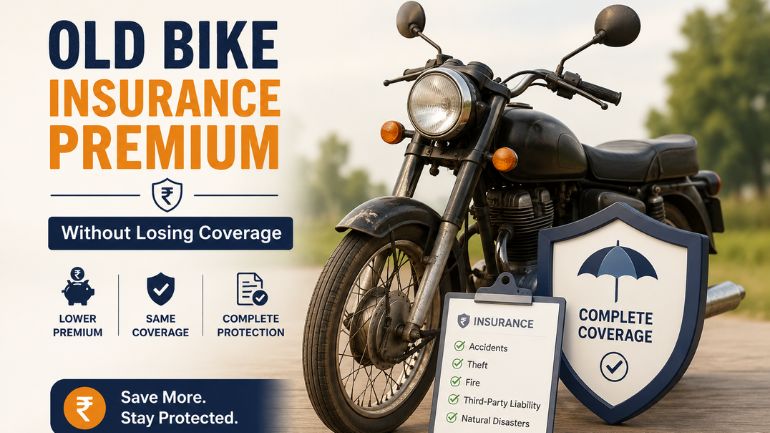
The insurance requirements of a vehicle often vary with age. As the bike ages, factors such as depreciation, usage patterns and coverage needs can influence the premium payable at renewal.
Reviewing these aspects carefully may reveal opportunities to manage the cost of old bike insurance without making major changes to coverage.
Why Insurance Premiums Differ for Older Bikes?
When renewing or purchasing bike insurance online, it is evident that premiums vary from one vehicle to another. The age of the bike is one of the several factors that insurers consider while determining coverage costs.
As a vehicle ages, its insured value generally declines due to depreciation. At the same time, factors such as claim history, location, engine capacity and selected coverage options can also influence the premium amount.
Understanding these elements can help policyholders identify opportunities to optimise their insurance costs.
Tips to Reduce Your Old Bike Insurance Premiums
Choose the Right IDV
The Insured Declared Value (IDV) represents the approximate market value of the bike for insurance purposes.
While selecting a lower IDV may reduce the premium, it can also affect the compensation available in the event of a total loss claim. On the other hand, choosing an unrealistically high IDV may increase the premium without necessarily providing proportional benefits.
Reviewing the IDV carefully during policy renewal can help ensure that the coverage remains aligned with the bike’s current value.
Make the Most of Your No Claim Bonus
A No Claim Bonus, or NCB, is a reward offered by insurers to policyholders who do not raise any claims during a policy period.
No Claim Bonus rewards are linked to a policyholder’s claim history and tend to grow with successive claim-free renewals. For this reason, many riders consider the long-term value of these benefits before filing claims for relatively minor repairs.
Review Add-On Covers Periodically
Add-ons are not necessarily a one-time decision. As a bike ages and ownership needs evolve, some optional covers may become more relevant than others.
Retain Covers That Continue to Add Value
Certain add-ons may still offer useful protection depending on how frequently the bike is used and the risks involved.
Consider Voluntary Deductibles
A voluntary deductible is the portion of a claim amount that the policyholder agrees to bear before the insurer contributes towards the settlement.
Choosing a higher voluntary deductible can sometimes reduce the premium. However, this option should be selected only after considering the potential out-of-pocket expenses that may arise during a claim.
Compare Plans Before Renewal
Insurance offerings may vary in terms of coverage features, exclusions and premium rates. Comparing available options before renewal can provide a clearer picture of what different policies offer.
Many insurers, including TATA AIG, provide online tools that allow policyholders to review policy features and coverage options before making a decision.
Maintain a Good Claims Record
A consistent claims history can influence long-term insurance costs. While insurance exists to provide financial support when needed, frequent claims for relatively small expenses may affect benefits such as the No Claim Bonus.
Assessing whether minor repairs can be handled without filing a claim may sometimes help preserve future premium savings.
Avoid Coverage Gaps
Allowing a policy to lapse can lead to complications during renewal and may interrupt insurance protection.
Renewing coverage before the expiry date helps ensure continuous protection and avoids the administrative steps that may be required to reactivate a lapsed policy.
Conclusion
Reducing the cost of old bike insurance does not necessarily require sacrificing coverage. Factors such as IDV selection, No Claim Bonus benefits, add-on reviews and deductible choices can all influence the premium payable at renewal.
Taking time to review these aspects periodically can help riders maintain suitable coverage while keeping insurance costs aligned with their needs.
Be the first to comment on "Tips to Reduce Your Old Bike Insurance Premium Without Losing Coverage"