
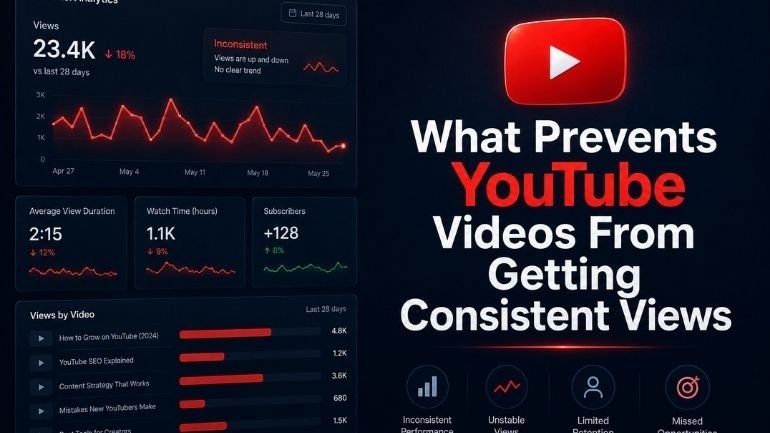
One upload may keep getting watched for weeks. The next may go quiet after only a few days. That can happen even when both videos come from the same channel.
There is rarely one reason behind consistent YouTube views. The subject matters. So do the title, thumbnail, reach, and what viewers do after clicking. Some videos simply find the right audience faster than others.
That is why creators should not judge every upload by the same standard. Looking at where views came from and how people watched can tell a much clearer story. In this guide, creators will see what commonly gets in the way of steady YouTube views and what they can check.
Common Reasons YouTube Videos Do Not Get Steady Views
Views can rise or fall for very different reasons. Checking these areas one at a time can make those changes easier to understand.
1. Limited Interest in the Video Topic
A well-made video can still have a small audience. Sometimes there simply are not that many people interested in the subject.
That audience can change too. A topic may be busy when something new happens, then become much quieter later. Other subjects stay useful for months or even years.
So two videos should not always be compared just because they came from the same channel. One may have had far more people looking for it from the start.
Creators can look at older uploads around similar subjects. That gives a better idea of whether the video itself needs work or whether the topic just has a smaller pool of viewers.
2. Not Enough People Are Seeing the Video
Before a video can collect steady views, people first need a chance to find it. A useful upload can only do so much if it reaches a very small group.
Creators have several ways to widen that reach. Search-friendly titles and descriptions can help. Videos can also be shared through social pages, playlists, Community posts, websites, email lists, or work with other creators. Some may also choose to buy YouTube views as one part of a wider visibility plan.
The aim is to put the video in front of more relevant viewers. What happens after that still matters. People need a reason to click, stay, and perhaps come back again.
3. Titles That Do Not Clearly Explain the Video
People often make a quick choice when they see a video title. If they have to work out what it means, they may simply keep scrolling.
A title does not need to be clever. It needs to make the subject clear.
Take a video about fixing blurry YouTube uploads. A title that says exactly what problem is being solved is easier to understand than one built around a vague phrase.
It can help to go back through older videos that did well. Creators may notice that their stronger titles made the benefit obvious much sooner. That kind of comparison is often more useful than copying a title style from another channel.
4. Thumbnails That Fail to Attract Clicks
A thumbnail has only a moment to make sense. If there is too much going on, viewers may not know where to look.
YouTube uses impressions to show how often a thumbnail was displayed. CTR shows how often those impressions turned into views.
But those numbers can move for many reasons. A video shown to loyal viewers may get a different CTR from the same video shown to a much wider group.
For the thumbnail itself, simple usually helps. The main image should be easy to spot. Any text should be short enough to read on a phone. Viewers should understand the basic idea without having to study it.
5. Viewers Leave Too Early
Someone clicking a video is a good start. It does not mean they will stay.
The first part often decides that. If a viewer came for one clear answer but hears a long intro first, they may leave before reaching the useful part.
The opening should get close to the point quickly. It should also feel like the same video that was promised by the title and thumbnail.
Audience retention in YouTube Studio can show where people start dropping off. If the same part keeps losing viewers, it deserves another look. Maybe it takes too long to get to the point. Maybe the section adds more detail than viewers need. Cutting or changing that part can make the video easier to keep watching.
6. Too Many Unrelated Topics on the Channel
A channel does not have to stick to one subject all the time. But moving from one very different topic to another can leave viewers unsure about what the channel is really about.
Someone might come for a phone guide and skip the next travel video. Another person may like gaming videos but have no interest in finance content. When the audience changes with almost every upload, the view count can change with it.
Creators still have room to try new ideas. It just helps when those ideas have some link to what viewers already enjoy. Related subjects, familiar video styles, and simple series can make the next upload feel like a natural fit.
7. Relying Too Much on Subscribers
A subscriber number can look strong on a channel page, but it does not tell the whole story.
People subscribe for many reasons. Some joined years ago and no longer watch. Some follow so many channels that they miss new uploads. Others may have subscribed because they liked one certain video and never came back for the rest.
YouTube Studio gives creators another way to look at the audience. New, casual, regular, and unique viewer data can show who is actually turning up to watch.
That can be more useful than the subscriber total alone. A smaller channel with people who come back often may see steadier viewing than a bigger channel where many subscribers rarely return.
8. Strong Competition for Viewer Attention
There is usually more than one video trying to win the same click.
This becomes easy to see with busy subjects. A new phone launch, a popular game, breaking news, or a trending tutorial can bring a flood of similar videos at once. Viewers then have plenty of choices.
Going narrower can help. Instead of making one video about a huge topic, a creator can answer one clear question inside it.
That makes the idea easier to explain. It can also make the title and thumbnail feel more direct. And when someone is looking for that exact answer, the video has a clearer reason to catch their eye.
9. Focusing Only on the Final View Count
The view count is useful, but it is only the end result. It does not tell creators how the video got there.
Two uploads can both reach 5,000 views and still have very different stories behind them. One might have appeared in front of many people but picked up fewer clicks. The other might have reached fewer viewers, yet those people stayed much longer.
This is where the other numbers help. Impressions show how often the video appeared. CTR gives more detail about clicks. Watch time, average view duration, retention, and traffic sources show what happened after that.
Put together, those numbers can point creators in the right direction. If the video was hardly shown, reach may be the first thing to check. If people saw it but did not click, the title or thumbnail may need another look. If they clicked and left soon after, the video itself may need attention.
Building More Consistent YouTube Views
Steady views rarely come from one change. It is usually a mix of small things working well together.
The subject has to interest the right people. Then those people need to notice the video and understand why it is worth opening. After the click, the content has to keep moving and give them what they came for.
That is why the final view count should not be the only number creators watch. Reach, CTR, watch time, retention, and returning viewers can show what is really happening.
Every upload will still perform a little differently. The useful part is learning from those changes. GetAFollower can be one part of a wider visibility plan, while the video itself still needs to give people a real reason to watch and return.
FAQs
Why do YouTube views suddenly slow down?
Views may slow when fewer people see the video, interest in the topic drops, fewer viewers click, or people start choosing other videos instead.
Do subscribers guarantee steady YouTube views?
No. Many subscribers will not watch every upload. Topic demand, active viewers, reach, clicks, and viewing habits all play a part.
Can changing a thumbnail help a video?
Yes. A clearer thumbnail may help people understand the topic faster. Checking impressions and CTR first can show whether the thumbnail needs attention.
Does watch time affect video performance?
Watch time shows how long viewers stay with the content. It can help creators see whether a video is holding attention after people click.
Should creators check more than total views?
Yes. Views alone give limited detail. Impressions, CTR, retention, watch time, and traffic sources can explain what is happening behind the final number.
Be the first to comment on "What Prevents YouTube Videos From Getting Consistent Views"