
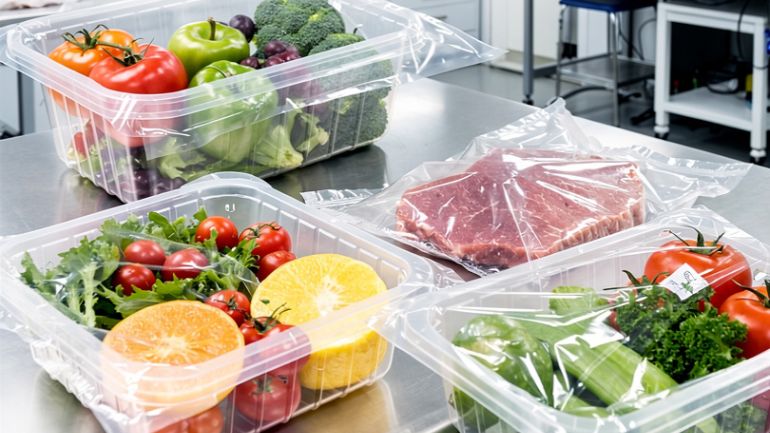
Oxygen is the primary driver of food spoilage. It causes oxidative rancidity in fats and oils, accelerates microbial growth, breaks down colour and flavour compounds, and reduces the shelf life of products across virtually every food category. Modified Atmosphere Packaging addresses this problem at the packaging stage by replacing the oxygen inside a sealed container with a controlled gas mixture in which nitrogen plays the central role. For food producers evaluating their preservation strategy, understanding how MAP works, which products benefit and how to supply nitrogen reliably is essential. Presscon specialises in nitrogen solutions for the food industry and supports producers from system design through to commissioning and long-term service.
What Is Modified Atmosphere Packaging and How Does It Work
Modified Atmosphere Packaging, commonly referred to as MAP, is a technique in which the natural air inside a food package is replaced by a precisely controlled gas mixture before sealing. The composition of this mixture is determined by the type of food product, its sensitivity to oxygen and moisture, and the target shelf life. By removing or significantly reducing the oxygen content inside the package, the processes that drive spoilage are slowed or stopped entirely.
The MAP process follows three steps. First, the product is placed in a packaging container, which may include a permeable membrane to regulate gas exchange for certain produce types. Second, the air inside the package is removed, either by vacuum extraction or by direct gas displacement. Third, the replacement gas mixture is introduced and the package is sealed immediately to prevent ambient air from re-entering.
The sealing material used in MAP packaging must provide a reliable gas barrier. If the packaging film allows oxygen to permeate over time, the protective atmosphere deteriorates and shelf life is compromised. This makes the choice of high-barrier film a critical part of any MAP system design.
The gases used in MAP and their functions
Three gases are used in MAP packaging, either individually or in combination, depending on the product.
Nitrogen (N₂) is an inert gas that displaces oxygen without reacting with the food product. It prevents oxidation, inhibits aerobic microbial growth and maintains texture by preventing package collapse in rigid containers. Nitrogen is the primary gas in MAP systems for snack foods, dried goods, coffee, bakery products and most oxygen-sensitive products.
Carbon dioxide (CO₂) has bacteriostatic and fungistatic properties that inhibit the growth of spoilage microorganisms. It is frequently used in combination with nitrogen for products such as meat, cheese and ready meals where microbial control is the primary preservation objective.
Oxygen (O₂) is included in specific MAP applications where its presence is necessary to maintain product quality. Fresh red meat is the principal example: a controlled level of oxygen preserves the oxymyoglobin responsible for the red colour consumers associate with fresh meat. For most other products, oxygen is excluded entirely.
Why Nitrogen Is the Foundational Gas in Food Packaging
Atmospheric air contains approximately 78% nitrogen and 21% oxygen. The challenge for food producers is that the 21% oxygen fraction drives nearly every deterioration mechanism that reduces product quality and shortens shelf life.
Oxidative rancidity occurs when oxygen reacts with the unsaturated fatty acids present in fats, oils and lipid-containing foods. The result is the development of off-flavours and off-odours that make the product unacceptable to consumers. Products such as edible oils, nut-based snacks, fatty fish and processed meats are particularly vulnerable to this mechanism.
Aerobic microorganisms including bacteria, moulds and yeasts require oxygen to survive and reproduce. By reducing oxygen concentration to levels at which aerobic growth is no longer sustainable, nitrogen packaging creates conditions that significantly extend microbiological stability without the use of chemical preservatives.
Enzymatic browning, which affects cut fruit and vegetables, also depends on the presence of oxygen. Reducing oxygen concentration through nitrogen flushing slows this reaction and preserves the appearance of fresh-cut produce.
Nitrogen itself is tasteless, odourless and completely non-reactive with food components. It has been evaluated by international food safety authorities including the FAO/WHO Joint Expert Committee on Food Additives and is approved for use in food packaging under European regulation 1333/2008, which requires products packaged in a protective atmosphere to carry the declaration “packed under protective atmosphere” on the label.
Which Food Products Benefit from MAP with Nitrogen
MAP with nitrogen is applicable across a wide range of food categories. The specific gas composition and target oxygen level vary by product, but the underlying principle is consistent: reducing oxygen concentration preserves quality and extends shelf life.
Snack foods and dried products
Crisps, nuts, popcorn, crackers and similar products are highly susceptible to oxidative rancidity and moisture uptake. Nitrogen flushing displaces oxygen and creates an internal cushion that also protects fragile products from physical damage during transport and handling. Shelf life extensions of several months compared to air-packed equivalents are standard in this category.
Meat and poultry
Fresh red meat typically uses a mixed gas atmosphere containing both nitrogen and oxygen, with the oxygen fraction maintaining colour. Processed meats, cooked poultry and cured products use nitrogen in combination with carbon dioxide to inhibit microbial growth and prevent oxidative discolouration. MAP packaging in this category can extend refrigerated shelf life from a few days to two weeks or more.
Fresh produce and salads
Pre-cut vegetables, salad mixes and fresh herbs lose quality rapidly through enzymatic activity, moisture loss and aerobic spoilage. Nitrogen-based MAP slows these processes while maintaining the sensory characteristics that consumers expect from fresh produce. The gas mixture for produce is typically tailored to the respiration rate of the specific product.
Cheese and dairy products
Nitrogen inhibits mould growth on the surface of cheese without altering flavour or texture. For soft cheeses and dairy-based products, nitrogen packaging maintains product integrity and prevents the oxidative changes that affect taste and appearance.
Bakery products and coffee
Bread, pastries and other bakery products benefit from nitrogen flushing to prevent moisture uptake and rancidity in fats used in the formulation. Coffee is one of the most demanding MAP applications: roasted coffee releases carbon dioxide and is highly sensitive to oxygen. Nitrogen flushing combined with one-way degassing valves is standard practice for maintaining the aromatic profile of roasted coffee.
Ready meals and long-shelf-life products
Prepared meals, frozen foods and shelf-stable products use nitrogen MAP to maintain taste, texture and nutritional value over extended storage periods. The reduction in oxygen concentration prevents the oxidative changes that would otherwise degrade product quality between production and consumption.
Nitrogen Flushing versus Vacuum Packing
Both nitrogen flushing and vacuum packing aim to remove oxygen from packaging, but they serve different purposes and suit different product types.
Vacuum packing physically removes air from the package, reducing the total gas volume and creating a tight seal around the product. This is effective for dense, moist products such as processed meat, cheese blocks and marinated products where the absence of gas volume is not a problem. However, vacuum packing crushes fragile or brittle products and is not suitable for products that require a gas cushion for physical protection.
Nitrogen flushing replaces air with inert gas rather than removing it entirely. The nitrogen atmosphere provides physical protection for fragile products, prevents package collapse in rigid containers and maintains the modified atmosphere over time. For most dry goods, snack foods, fresh produce and bakery products, nitrogen flushing is the more appropriate method.
On-Site Nitrogen Generation for Food Packaging
A MAP system is only as reliable as the nitrogen supply that feeds it. Many food producers have historically relied on nitrogen cylinders or bulk liquid deliveries to supply their packaging lines. Both approaches carry operational and financial disadvantages that become more significant as production volumes grow.
Cylinder supply requires ongoing management of inventory, cylinder rental, refilling logistics and safety compliance for compressed gas storage. Bulk liquid nitrogen involves significant infrastructure investment, regular deliveries and the inherent inefficiency of handling nitrogen in cryogenic form when the end application requires ambient-temperature gas. Both supply methods introduce dependency on external logistics and variable pricing from gas suppliers.
An on site nitrogen generator addresses these limitations by producing nitrogen directly from compressed air at the point of use. The generator draws ambient air, separates nitrogen from oxygen using Carbon Molecular Sieve technology, and delivers a continuous nitrogen stream to the packaging line at the required purity and flow rate. There are no deliveries, no cylinder management and no dependency on external gas pricing.
For food packaging applications, nitrogen purity requirements typically range from 99% to 99.999%, depending on the sensitivity of the product and the target residual oxygen level inside the package. An on-site generator is configurable to meet the purity specification of the application and can be scaled modularly as production volumes increase.
The return on investment for on-site nitrogen generation in food packaging environments is typically achieved within 12 to 18 months, driven by the elimination of cylinder and delivery costs and the reduction in compressed air consumption that modern HP-PSA technology provides.
Why Food Producers Choose Presscon for Nitrogen Generation
Presscon has been developing and manufacturing nitrogen generation systems since 1997, giving the company more than 25 years of application-specific experience across the food industry and related sectors. Every system is designed and built in-house at the production facility in Honselersdijk, in the Netherlands. This fully integrated approach means that engineering, manufacturing and quality control are all managed within the same organisation, with no reliance on third-party component assembly.
The N-Gen generator is based on HP-PSA technology, a redesigned version of standard Pressure Swing Adsorption that incorporates a patented CMS compression system and an optimised airflow distribution design. These two features extend the service life of the Carbon Molecular Sieve, maintain stable purity output across varying demand conditions and reduce energy consumption by 40 to 50% compared to conventional PSA or membrane-based generators. The N-Gen requires less than 2 m³ of compressed air to produce 1 m³ of nitrogen at 95% purity, and delivers purity levels from 95% up to 99.9999% depending on system configuration.
The modular design of the N-Gen means that multiple units can be installed and controlled independently. Individual modules can be isolated for maintenance without interrupting nitrogen production on the remaining units. In the event of a fault, a generator module can be replaced in under 15 minutes, keeping downtime to a minimum on production-critical packaging lines.
Presscon provides 24/7 service support, with technicians available around the clock to respond to operational issues. For food producers where packaging line downtime translates directly into production losses and product waste, this service commitment is a practical operational requirement rather than a standard feature.
Tailor-made system configurations are developed for each installation. Presscon’s engineering team assesses current nitrogen consumption, delivery costs and packaging line requirements to produce a detailed savings model and a projected payback timeline before any investment decision is made.
Key Considerations When Specifying a Nitrogen System for MAP
Selecting the right nitrogen generation system for a MAP application requires defining several parameters accurately. The target residual oxygen level inside the finished package determines the required nitrogen purity. A product requiring less than 1% residual oxygen inside the package places higher demands on purity than one where 2 to 3% oxygen is acceptable.
The total nitrogen flow rate required by the packaging line depends on the number of packaging machines, their cycle rates, the package volume and the gas flush ratio used. An undersized nitrogen supply will result in inconsistent residual oxygen levels and variable shelf life performance. An oversized supply wastes compressed air and increases operating costs.
Feed air quality is a significant factor in system performance. Contaminated or humid compressed air reduces the adsorption efficiency of the CMS and shortens its service life. A complete compressed air pre-treatment train, including filtration, drying and oil removal, is a prerequisite for consistent nitrogen generator performance.
System redundancy should be considered for packaging lines where any interruption to nitrogen supply would result in production stoppage or product loss. Modular generator configurations allow one unit to continue operating while another is taken offline for maintenance, maintaining supply continuity without requiring a complete backup system.
Modified Atmosphere Packaging with nitrogen is a technically sound and operationally proven method for extending the shelf life of food products across a wide range of categories. When supported by a reliable on-site nitrogen supply designed for the specific demands of the application, MAP provides consistent performance, predictable operating costs and a measurable contribution to reducing food waste throughout the production and distribution chain.
Be the first to comment on "Modified Atmosphere Packaging with Nitrogen: The Complete Guide for Food Producers"