
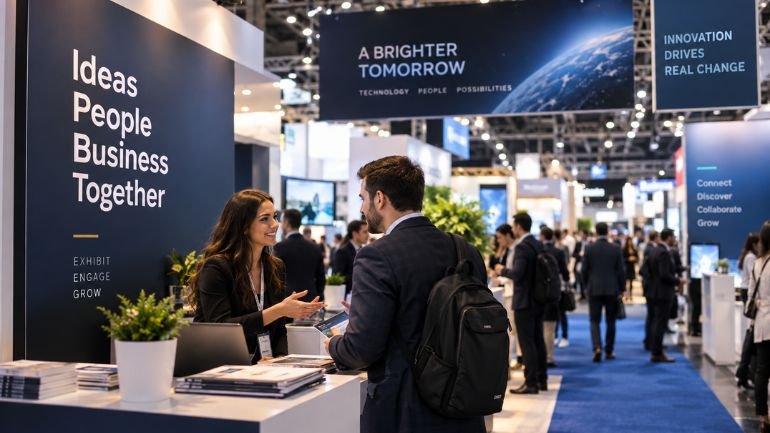
Ask anyone who’s done a trade show badly, and they’ll describe the same experience: a booth thrown together two weeks out, a team that arrived without a plan, and a spreadsheet of leads nobody touched until February. The show wasn’t a failure. The preparation was.
2027’s calendar is packed with the big returning events plus some interesting new additions, and the brands that do well at them treat each show as a campaign, not a three-day field trip. Whether the plan covers one flagship event or a full season, the same principles keep deciding who gets remembered and who gets walked past. Here’s the 2027 landscape, and how to show up at it properly.
How to Plan and Execute a Successful Trade Show Strategy in 2027
The Big 2027 Shows Worth Planning Around
CES, Las Vegas (January). Still the year’s opening statement. Enormous, chaotic, expensive, and unbeatable for tech-adjacent brands wanting global press attention. Book accommodation early or pay dearly for it.
NRF Big Show, New York (January). The retail industry’s main event. Buyer-heavy, which makes it one of the better shows for actual commerce rather than vague brand exposure.
SXSW, Austin (March). Half conference, half cultural moment. Best suited to brands with something to say rather than something to demo.
Hannover Messe, Germany (April). The world’s largest industrial show. For manufacturing, engineering, and automation brands, it’s effectively mandatory.
IMEX America, Las Vegas (October). The meetings and events industry’s flagship and a masterclass in exhibiting if you’re paying attention while you’re there.
AWS: Invent, Las Vegas (November/December). Cloud and enterprise software’s late-year heavyweight. Technical audiences, long sales cycles, and deep conversations.
Dates shift every year, so confirm each show’s 2027 schedule directly and note that the ones with early-bird space bookings nearly a year out fill first. The good booths go early.
Event Planner Tips To Help Your Brand Make a Lasting Impression & Get a Great ROI
-
Choose Shows by Who’s Walking, Not by Reputation
A big trade show name on a banner means nothing if the buyers on the event floor aren’t yours. Plenty of companies have paid premium rates for famous events and left with a badge-scan list full of students, job hunters, and competitors.
Look online at the previous edition’s attendee breakdown: industries, seniority, and buying roles. Ask organizers for the data; the good ones provide it. And ask exhibitors who’ve done the show what they actually got. Honest answers save budgets.
Better to dominate a mid-size show full of your buyers than decorate a giant one full of everyone else’s.
-
Start Planning Six Months Out Genuinely
Six months sounds excessive until you write down the timeline. Booth space at major shows books out far ahead. Shipping, accommodation, and flights all rise sharply inside the last eight weeks. And the exhibit itself, designed, built, printed, and tested, needs longer than anyone budgets for the first time.
A workable rhythm: space booked 6+ months out, design locked 4 months out, marketing running 8 weeks out, logistics confirmed a month out, and a full team briefing the week before: who staffs which slot, who handles which conversation, what happens the moment someone scans a badge.
The teams that look relaxed on day one finished the list in advance. It’s not talent. It’s the calendar.
-
Design the Exhibit Around One Job
Every booth has one job at one show: launch a product, generate qualified leads, book demos, meet existing accounts. One. Booths trying to do everything communicate nothing.
That decision drives the design. Lead-gen booths need open frontage and fast interactions. Demo-led booths need a seated area where a proper conversation can happen. Brand-announcement booths need spectacle and somewhere for the press to stand. Teams using trade show exhibits built around a single goal consistently outperform the ones trying to be everything to everyone in a 6×3 space.
And the three-second rule still rules the floor: one message, readable from across the aisle, before anyone decides whether to stop.
-
Give People a Reason to Stay and Talk
Footfall is vanity. Conversation is sanity. The gap between the two closes with whatever the booth offers beyond a counter and a smile.
Working demos beat posters; people trust their own hands. Seating beats standing; show floors are brutal on legs, and the booth with chairs inherits the tired. Whatever the hook, brief the staff properly: greet, ask one good question, and listen more than pitch. The best-attended booths aren’t the loudest. They’re the ones where the people inside seem genuinely pleased to see you.
-
Sort the Follow-Up Before the Show Starts
The most wasted money in exhibiting is the lead list that goes cold. Decide the follow-up process in advance: who receives the scans, when the first email goes out (within a week, ideally days), and what it says is a reference to the actual conversation, not a generic blast.
Budget tip that pays for itself: picking up a used trade show booth for one or two flagship events frees real money for the follow-up side, the part that actually converts scans into pipeline. The booth earns attention; the follow-up earns revenue.
-
Measure the Show Like the Investment It Was
Afterward, resist the warm glow and ask the sharp questions. Leads versus the target set beforehand. Meetings held versus booked. Costs against pipeline were created. Which conversations were worth having and which staff slots worked.
One season of honest measurement turns next year’s plan from guesswork into strategy: which events earn their slot, which booth sizes justify themselves, and which hooks actually stopped people. The brands making a “lasting impression” at 2027’s shows will mostly be the ones that measured 2026 properly.
End Point
The 2027 calendar is full of opportunity, but the shows reward preparation, not presence. Pick events by the buyers in the aisles, plan months out, build the exhibit around a single job, give people a reason to linger, and have the follow-up running before the doors open. Do that and the lasting impression takes care of itself because the brands people remember are the ones that showed up as they meant it.
Be the first to comment on "Top Trade Shows in 2027- Exhibit Planning Tips to Help Your Brand Make a Lasting Impression"